By Adonis Byemelwa
A thousand people logging into the same classroom would hardly raise eyebrows in an era of online learning, until you realise those learners were joining from ministries, classrooms, farms, island states, and conflict-response offices scattered across an entire continent.
Between February 24 and April 7, 2026, 1,068 participants from 45 African countries gathered in a shared digital space to confront a question shaping modern work: how do you stay relevant in an AI economy that is moving faster every month?
The seven-week program, “Your Journey in the AI Economy, Skills for Work, Learning, and Life,” was organised by Distance Education for Africa. Its promise sounded modest on paper, practical artificial-intelligence literacy, yet the response suggested something deeper. People were not simply curious about technology; they were searching for direction.
Much of the global AI conversation happens far away in Silicon Valley boardrooms or research laboratories. However, here, participants arrived carrying everyday pressures: deadlines, limited staffing, unpredictable infrastructure, and the quiet anxiety of industries changing faster than training systems can keep up. For many, joining the course felt less like professional development and more like catching a moving train.
The numbers tell their own story. Botswana sent an extraordinary 408 learners, nearly forty per cent of the entire cohort. Conversations among participants suggested that educators, civil servants, and professional networks encouraged one another to enrol, creating momentum that spread quickly through workplaces.
Close behind was Kenya with 255 participants, a reflection of growing interest among teachers, analysts, and entrepreneurs experimenting with digital tools. Meanwhile, Mauritius contributed 63 learners, while Uganda and Ethiopia added strong delegations of professionals eager to rethink how work gets done.
Participation stretched well beyond major economies. Learners logged in from fragile environments, including South Sudan and small island nations such as Comoros, sometimes representing their entire country alone in the virtual room. Their presence quietly challenged assumptions about who gets access to emerging technologies.
Additionally, that diversity shaped the atmosphere of the course itself. A government librarian might find themselves exchanging ideas with a humanitarian analyst, while an artist listens alongside a district agriculture director. Conversations moved easily between lesson planning, crop forecasting, budgeting pressures, and community organising.
Unlike many AI courses promising instant mastery of software tools, this one leaned heavily into judgment and decision-making. Participants were encouraged to treat artificial intelligence less as an answer machine and more as a collaborator capable of organising messy thinking into usable action.
That approach resonated because the challenges learners faced were rarely technical. Internet signals dropped mid-session. Electricity outages interrupted discussions. Some attended after long workdays, balancing family responsibilities while stretching limited mobile data bundles. Showing up each week required persistence.
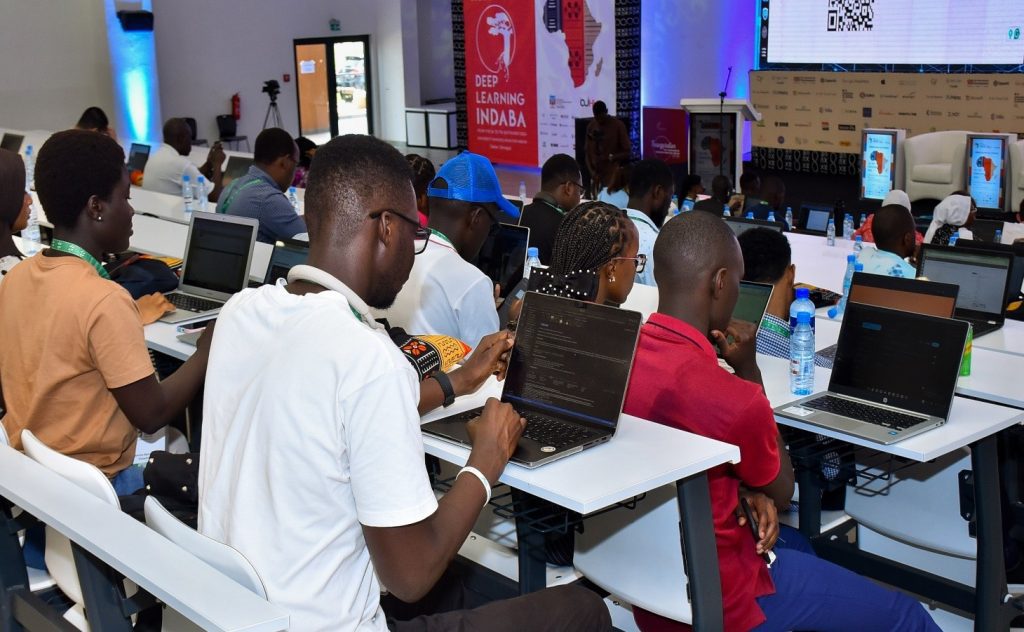
Participation stretched well beyond major economies. Learners logged in from fragile environments, including South Sudan and small island nations such as Comoros
However, those very obstacles seemed to deepen engagement. One participant from Kenya described using lessons from the course to launch a weekly online support circle for women feeling professionally lost, structuring conversations with AI assistance to save preparation time. The technology did not replace empathy; it created space for it.
In another case, a humanitarian analyst working in South Sudan explained in feedback shared with organisers that AI-guided scenario planning helped structure conflict early-warning analysis. Forecasting confidence improved, allowing earlier planning discussions aimed at preventing displacement rather than reacting to a crisis after the fact.
Elsewhere, professionals discovered quieter victories. A proposal specialist said artificial intelligence had become a “virtual collaborator,” merging complex technical and financial documents into clear submissions. Teachers drafted lesson outlines faster. Administrators summarised reports that once consumed entire afternoons.
These examples remain participant testimonies rather than formal research outcomes, but together they illustrate a shift already underway. Artificial intelligence was not arriving as a distant innovation; it was entering offices, classrooms, and community initiatives through everyday experimentation.
Late enrollment emails continued arriving even after sessions began. Applicants from Ghana, Nigeria, Lesotho, and Benin described motivations that sounded strikingly similar despite different careers. Some wanted promotion opportunities. Others feared being left behind.
One educator wrote that she needed to understand “the world’s new order of AI.” A government director responsible for knowledge management hoped to improve public service delivery. An unemployed applicant wanted a chance to compete in a digital labour market that increasingly rewards adaptability.
Of course, enthusiasm alone cannot erase structural realities. Connectivity gaps remain significant across many regions, and language accessibility continues to shape who can participate comfortably. A seven-week course cannot guarantee employment outcomes or institutional reform overnight.
Still, organisers framed expectations carefully. Artificial intelligence, they emphasised, works best when it strengthens human judgment rather than replacing it. Participants were encouraged to test ideas locally, in classrooms, offices, and community projects, instead of waiting for perfect conditions.
Botswana’s remarkable participation offers a revealing lesson. When professional networks move together, adoption accelerates quickly. Shared encouragement appears to have turned curiosity into collective action, suggesting that AI literacy may spread through peer influence as much as formal policy.
What lingered most strongly in participant reflections, however, was gratitude. Many described access to free, high-quality education as rare, particularly for professionals balancing careers and families. Removing cost barriers allowed curiosity to flourish in ways traditional programs often cannot.
Artificial intelligence is frequently portrayed as a looming disruption threatening livelihoods. Inside this classroom, the tone felt different. Learners spoke about relief, relief at finishing reports faster, relief at organising thoughts more clearly, relief at finally understanding technology that once felt intimidating.
Seven weeks will not transform economies by themselves. However, something meaningful happens when more than a thousand people decide simultaneously to rethink how they learn, write, plan, and collaborate. Momentum begins quietly, almost invisibly.
Somewhere between Botswana’s massive delegation and single learners representing island nations alone, a continental experiment took shape. Not a race to build the next technology giant, but a shared effort to think differently about work itself.
Africa’s AI moment may not arrive through dramatic headlines or billion-dollar announcements. It may emerge instead through teachers refining lessons at midnight, analysts forecasting risks earlier, administrators saving hours each week, thousands of small decisions adding up to something larger than any single course could promise.
Originally published by Pan African Visions (https://panafricanvisions.com/2026/03/deafricas-ai-training-1068-learners-in-45-african-countries/)